
Project Spotlight: Underpinning at Brooke Charter School
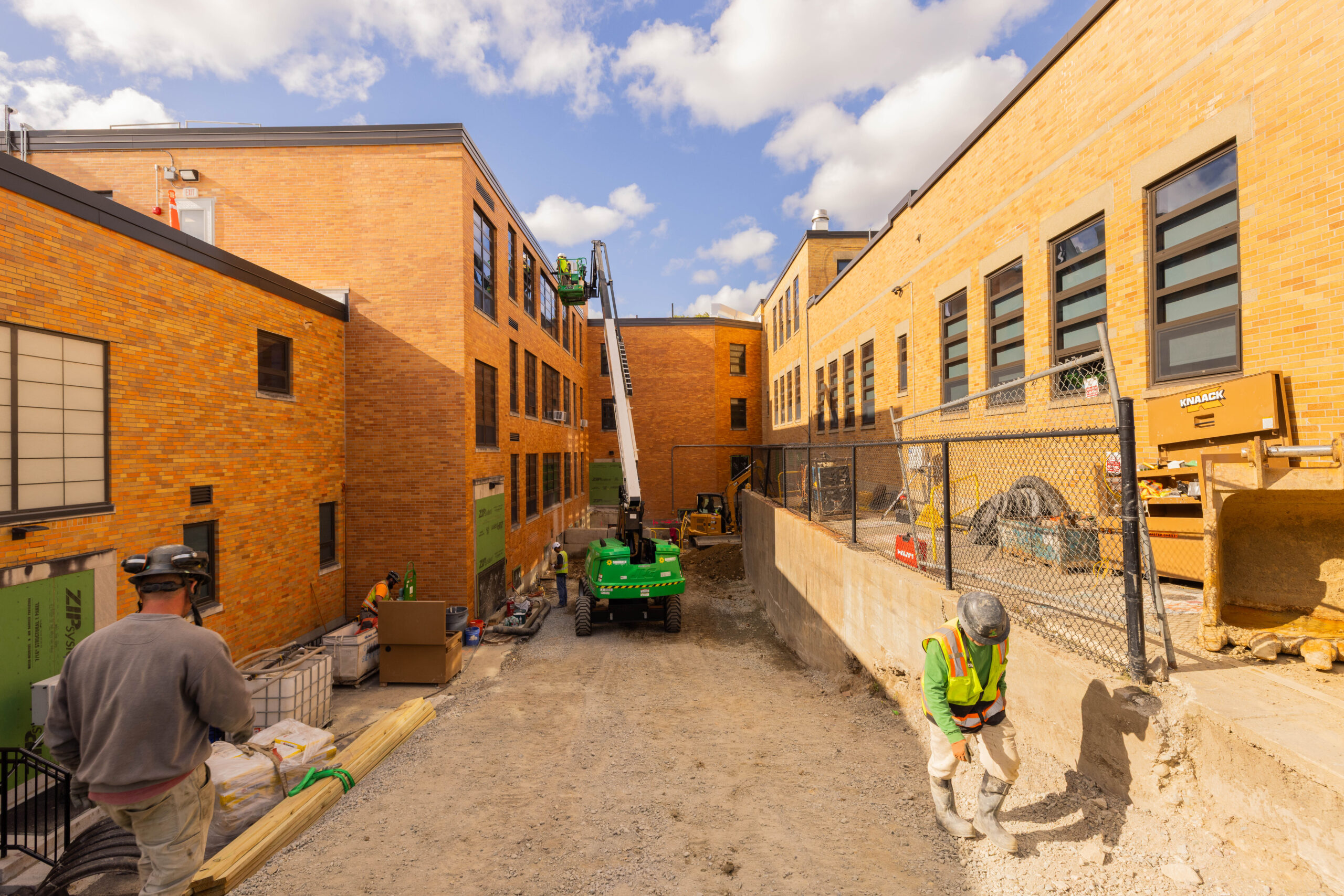
In Roslindale, Mass., Commodore Builders is currently working on a renovation project at Brooke Charter School with a complicated scope: underpinning an existing foundation in a small space surrounded by an active school building.
The Challenge
The project site is a tight, courtyard-sized space surrounded on three sides by Brooke Charter School classrooms. With the school year already underway, the team is executing highly sensitive foundation work with hundreds of students looking on. 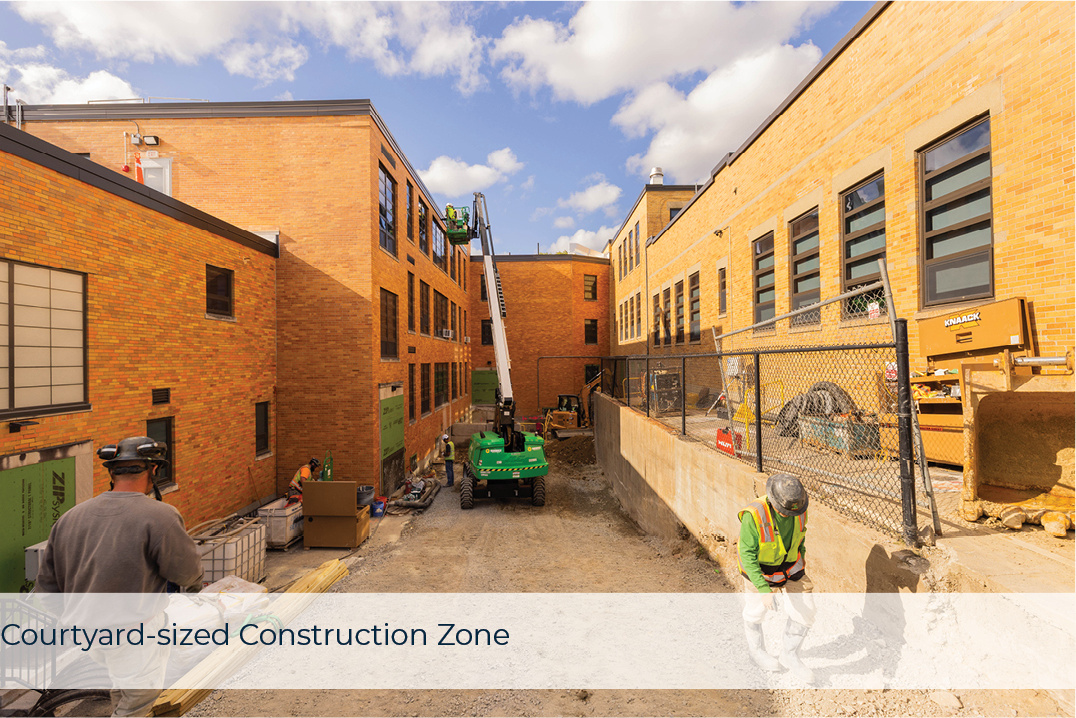
The project scope includes a 3500 SF building addition that includes a new seven stop elevator. To install the new elevator pit adjacent to the existing foundation the team must excavate approximately 16 feet below the current grade, which is well below the existing foundation depth. Without intervention, digging to that depth would undermine the adjacent buildings and risk structural collapse. That’s where underpinning comes in.
What Is Underpinning?
Underpinning is used to strengthen and extend an existing foundation deeper into the ground. The work is completed in small, carefully sequenced & engineered sections so the building remains supported throughout the process. Worker’s hand-dig individual pits beneath the existing foundation, then they fill each pit with concrete to create a new, deeper foundation below the original. Grout is then packed into the remaining space between the old and new foundations to ensure the building’s weight is safely transferred to the new concrete support below.
Preconstruction Preparation
During pre-construction, Commodore utilized 3D modeling to visualize the underpinning scope, a tool that proved valuable in communicating complexity and winning the work. The team plans to continue using the model during construction for major milestones, including underpinning and crane placement for the structure.
Excavating subcontractor James W. Flett Company (Flett) assisted Commodore in preparing the site for the dig. The construction area has limited space for equipment and a steep grade change that made accessing the excavation zone difficult. So, Flett built a compacted access road to create a stable, truck-accessible path into the pit. The low elevation and sloped road could also have caused water to pool in the pit. To combat this, Flett installed a water pump system that continuously pumps water from the pit.
Next, foundation services subcontractor Hub Foundation installed a Support of Excavation (SOE) system. This system uses six steel piles drilled about 25 feet into the ground, with wood boards placed between them to hold back the surrounding soil. Because the courtyard has a steep change in elevation, the SOE must be installed first so crews can safely access and excavate the elevator pit. 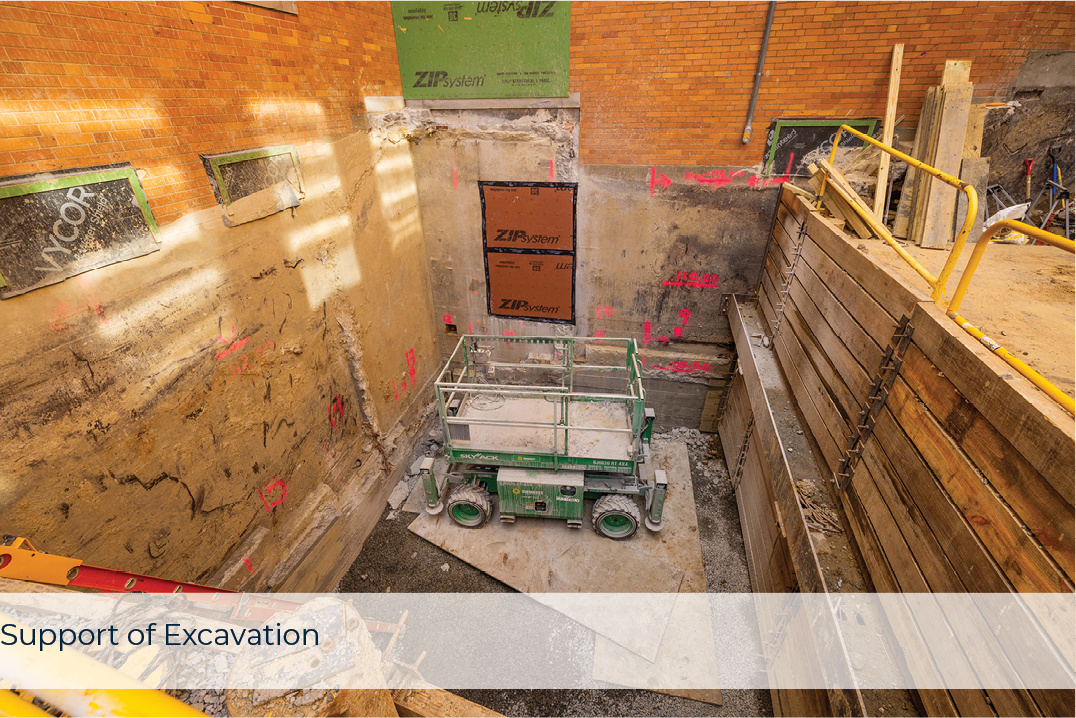
Project Specifics at Brooke Charter
For this project, underpinning is needed to create enough depth for the new elevator pit. Because the work is completed in small sections by hand, it is labor-intensive and requires careful sequencing.
Adjacent pits cannot be excavated at the same time because too much soil would be removed simultaneously, undermining the structure above. Instead, crews must skip pits between active digs, sometimes working in every other or every third pit. They follow a carefully engineered sequence reviewed and approved by the full design team, structural engineers, and geotechnical engineer.
There are 19 total underpinning pits, with pit depths varying. Most are four to five feet below the bottom of the existing foundation, with the upper section pits being significantly larger, at about 10 feet.
J.W. Flett executed the demolition of the area and excavated the pit area to ensure the site was clear and accessible for Hub Foundation to dig the holes. Along with the SOE, workers from Hub opened the pits, poured the concrete, and repeated until all the holes were complete. 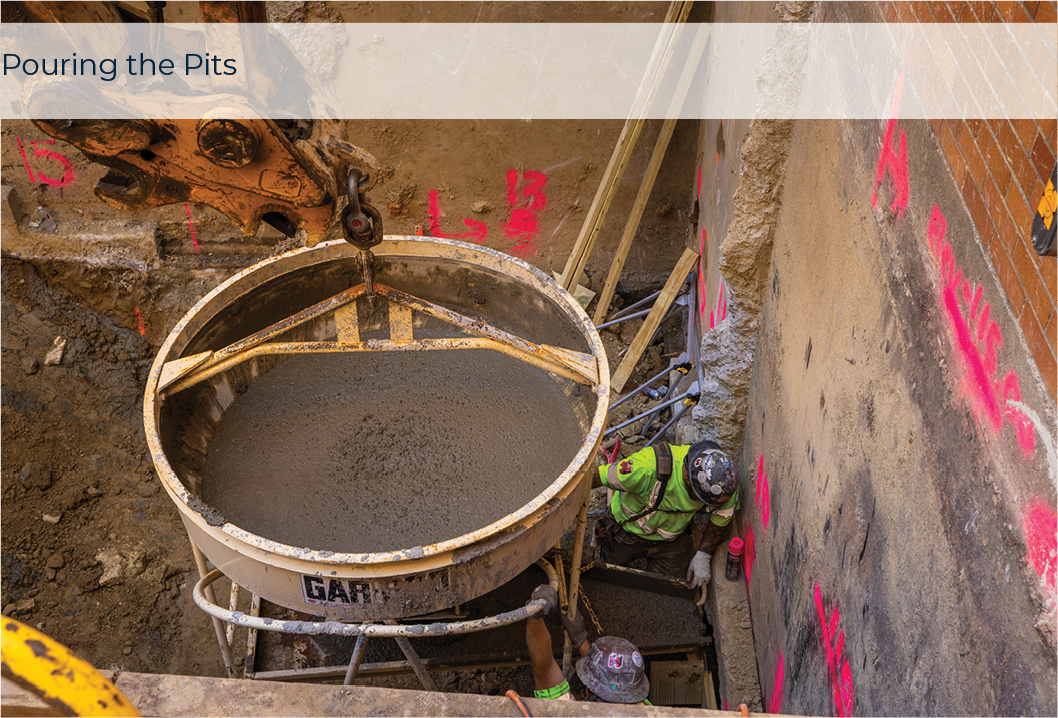
Additionally, the active school environment posed challenges for material deliveries, so Hub, Flett, Commodore, and Brooke Charter worked together to minimize disruptions for students. Teams restricted deliveries to 8 a.m. or later to avoid impacting school drop-off times. They have also minimized tasks that will produce excess dust and noise to outside school hours.
Community Engagement
With students back in school and watching the work from their windows, Commodore is working closely with the school faculty to keep the students up to date with project progress and planning school events to bring the learning aspects of the construction project into the classroom.